 Trovy: From designer to design engineer
How I went from handing engineering Figma files to shipping production code at a fintech startup.

Trovy: From designer to design engineer
How I went from handing engineering Figma files to shipping production code at a fintech startup.
Your home equity, in your wallet.™
In 2025, I joined as the founding and sole designer, and shipped the brand, the card, the application, the account dashboard, the marketing site and the ads. What started as a traditional design role morphed into something new.
Job 1: Relentlessly alleviate friction.
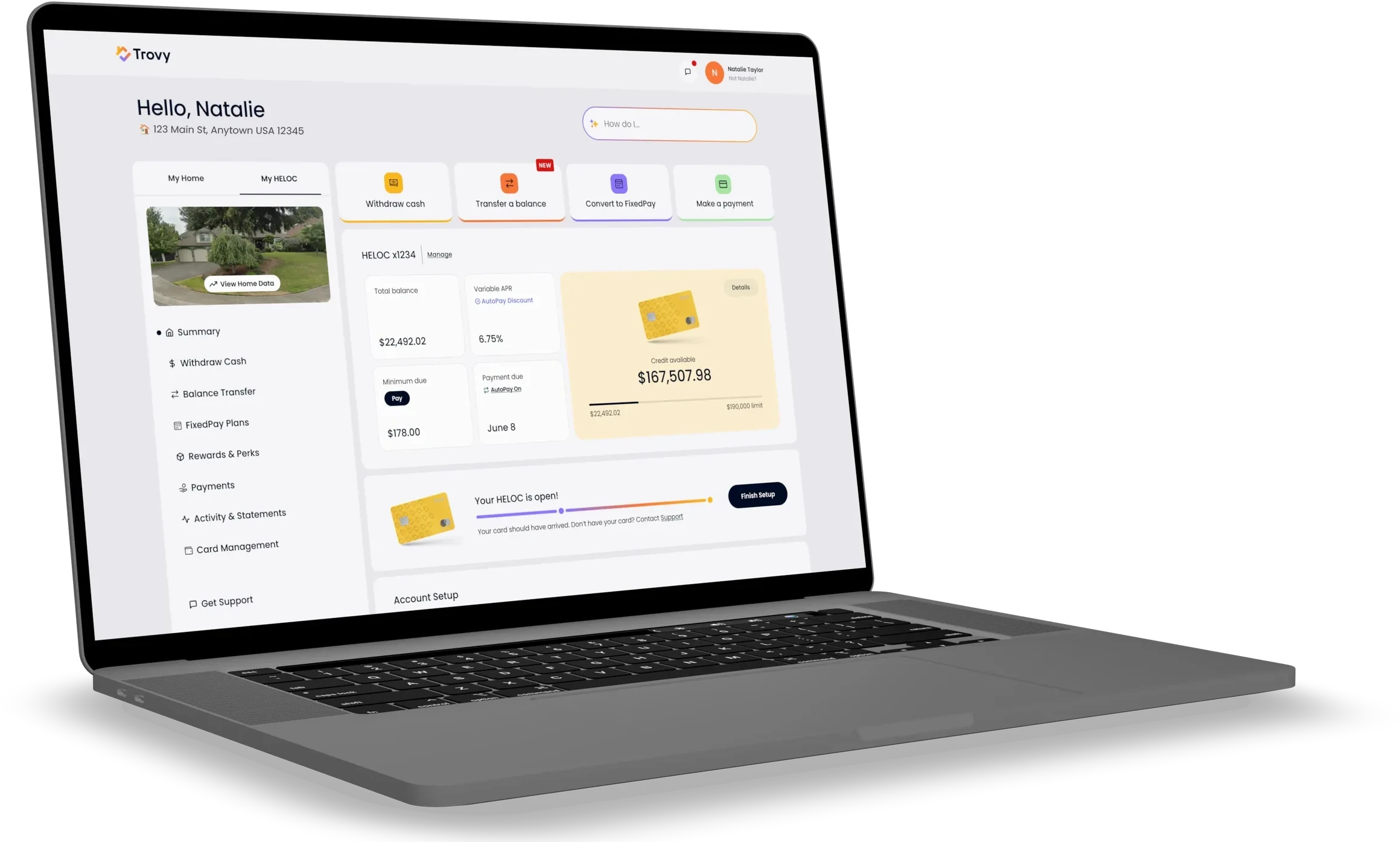
Trovy went from 0–100MM PMV in one year of operation by relentlessly alleviating friction in the application flow. A HELOC is one of the cheapest ways to borrow, but it usually means weeks of paperwork and a draw request every time you need money. Trovy is a fully online HELOC, with your line available on a card. I owned the E2E application flow and the online account.
Happy-path prequal flow takes 2 minutes or less. Try it yourself.
Live prototype · tap through it
Job 2: Go beyond table stakes.
Working on a close iteration loop with Operations, Product, and Engineering, I shipped all the core experiences that managing a top-tier financial product required, in just a few weeks. With the table stakes in place, we could now focus on differentiation.
Who’s that brand?
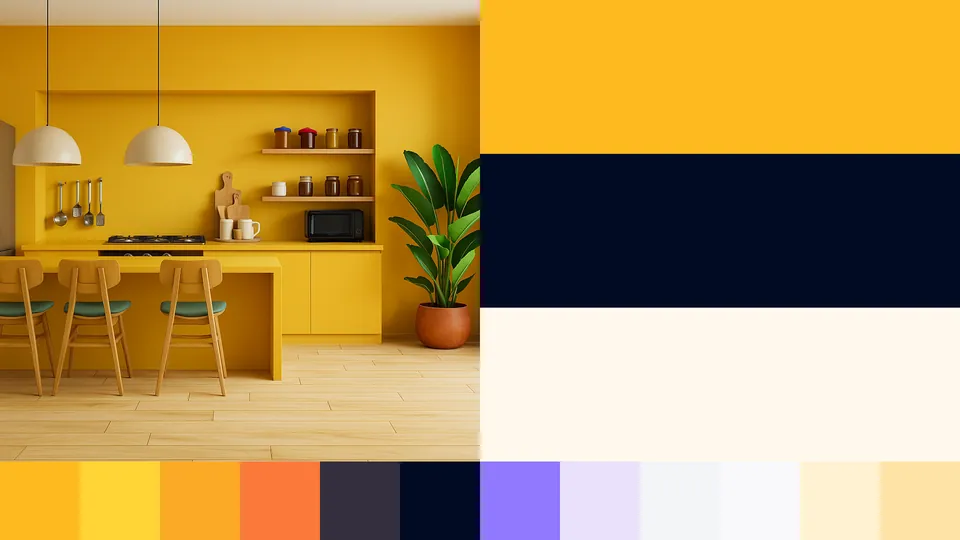
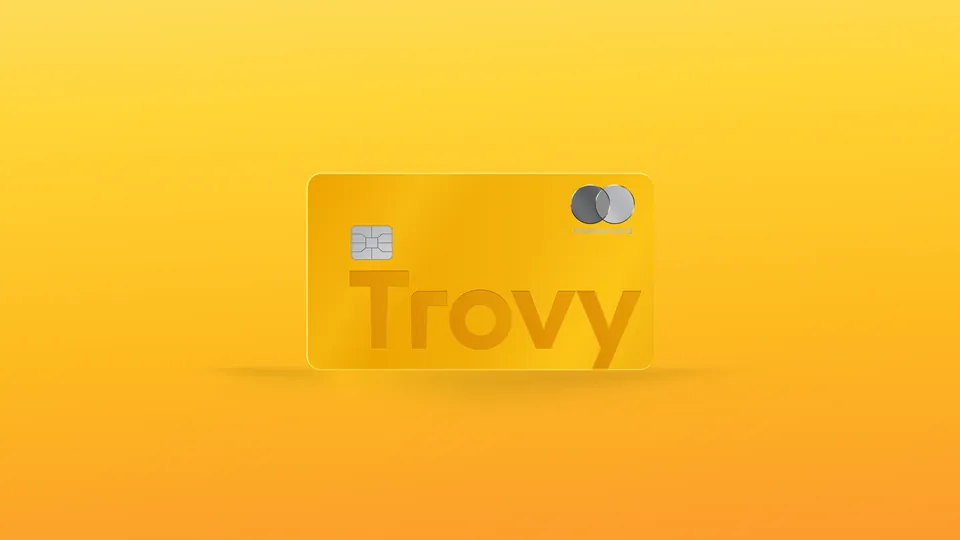
I wanted to break out of the fintech blue/green palette and develop a memorable fintech brand with a provocative signature color. Trovy Gold was reminiscent of sunshine in your backyard, or, a treasure trove.





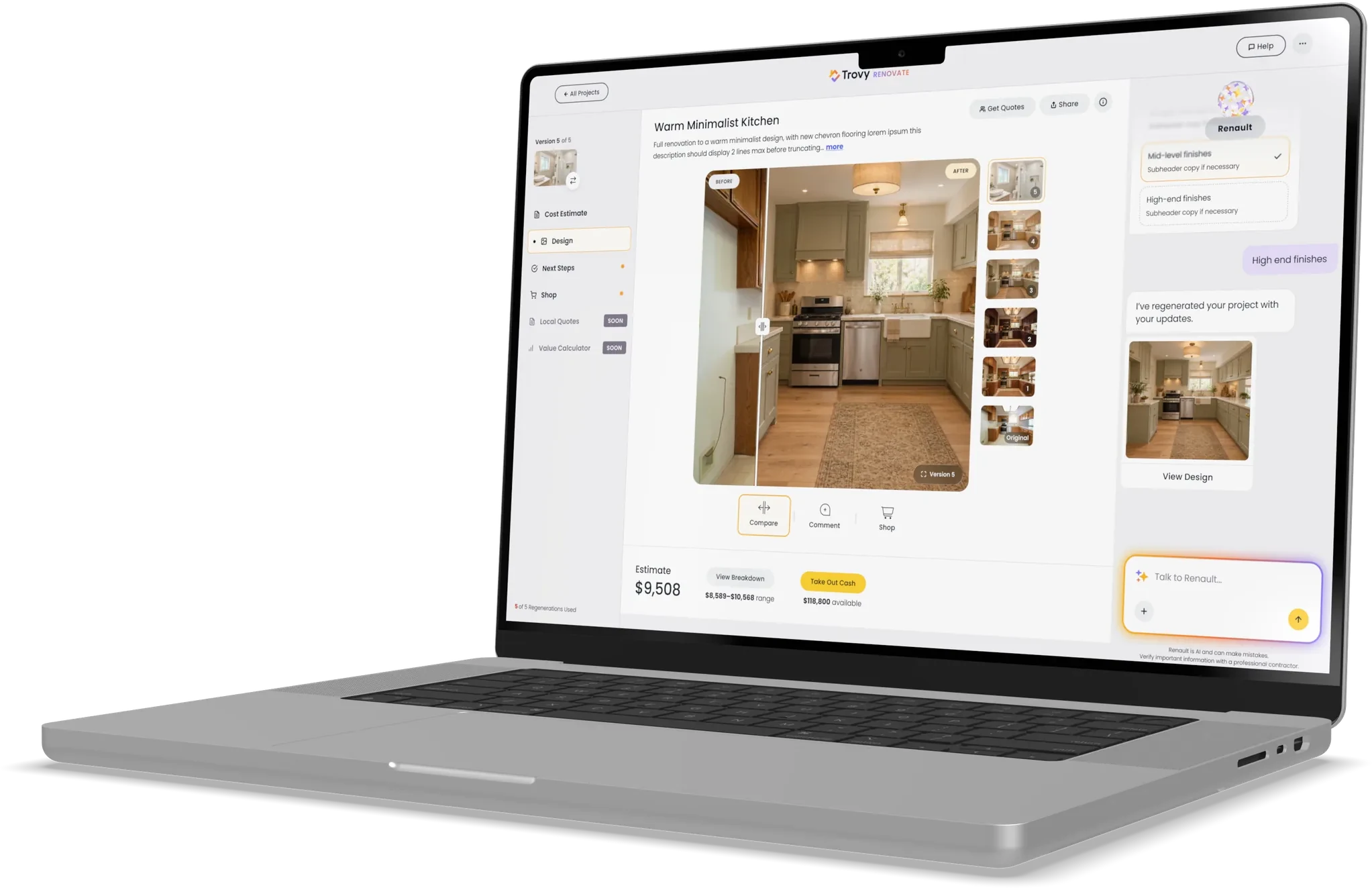
Renovate with Trovy
Renovate with Trovy was my first project shipping the front end myself. Renovation is the biggest reason homeowners tap their equity, and the point where they are least sure what they want, what it costs and whom to hire.
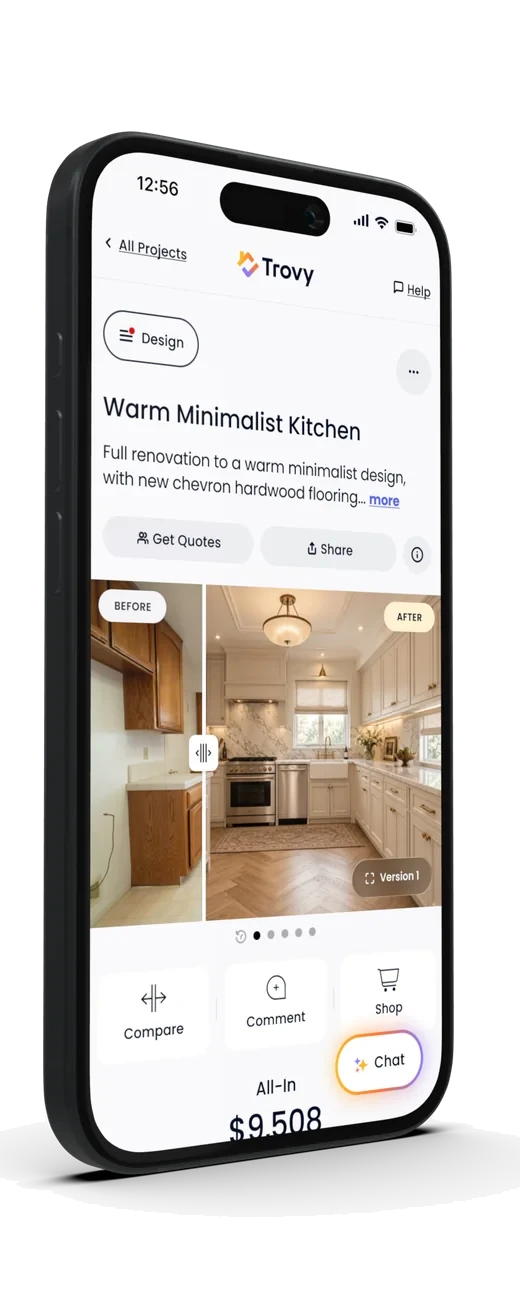



0-1 in one week
Go from your room’s photo to an AI-generated plan, a rendered design, a cost estimate and a shopping list, with the Trovy line as the way to pay for it.
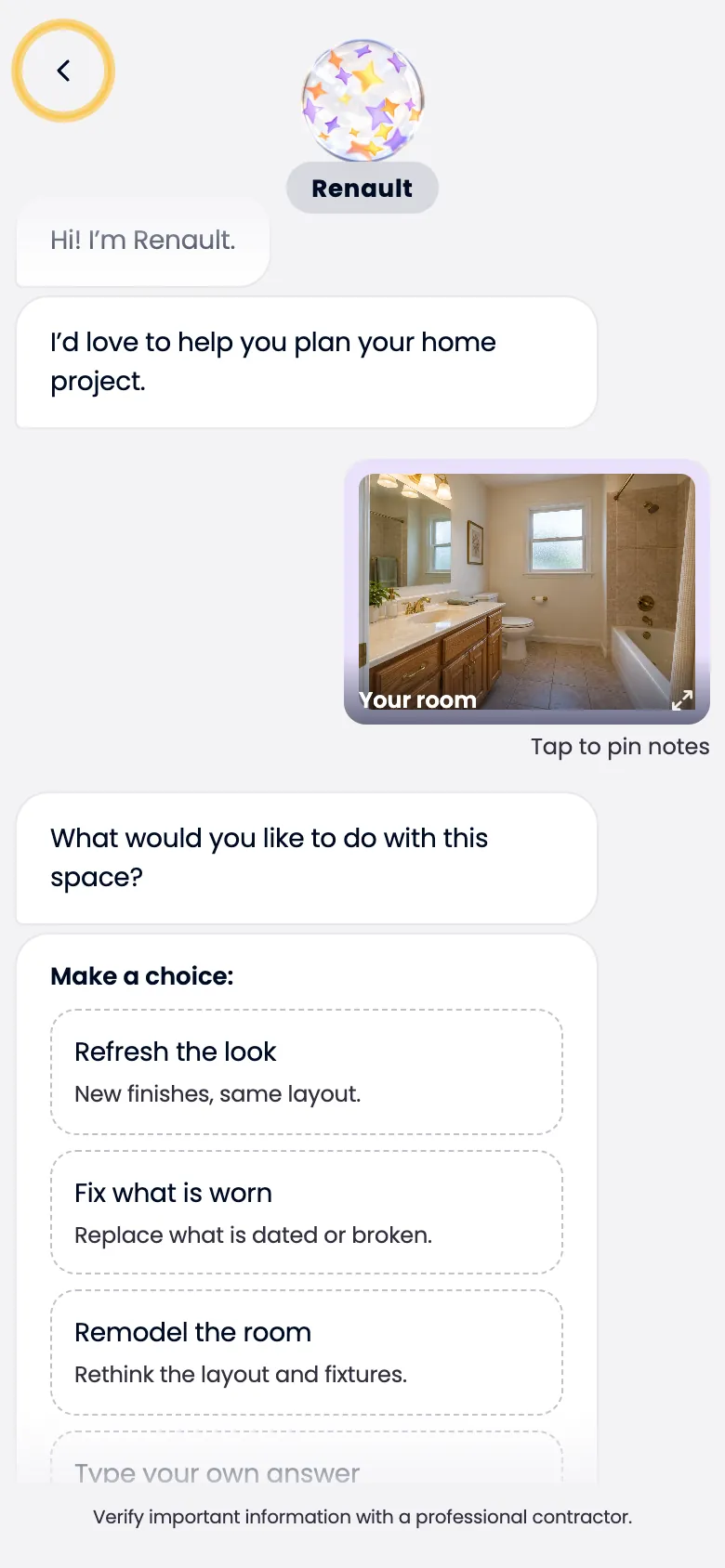
Plan it with Renault
A few quick questions: scope, style, budget.
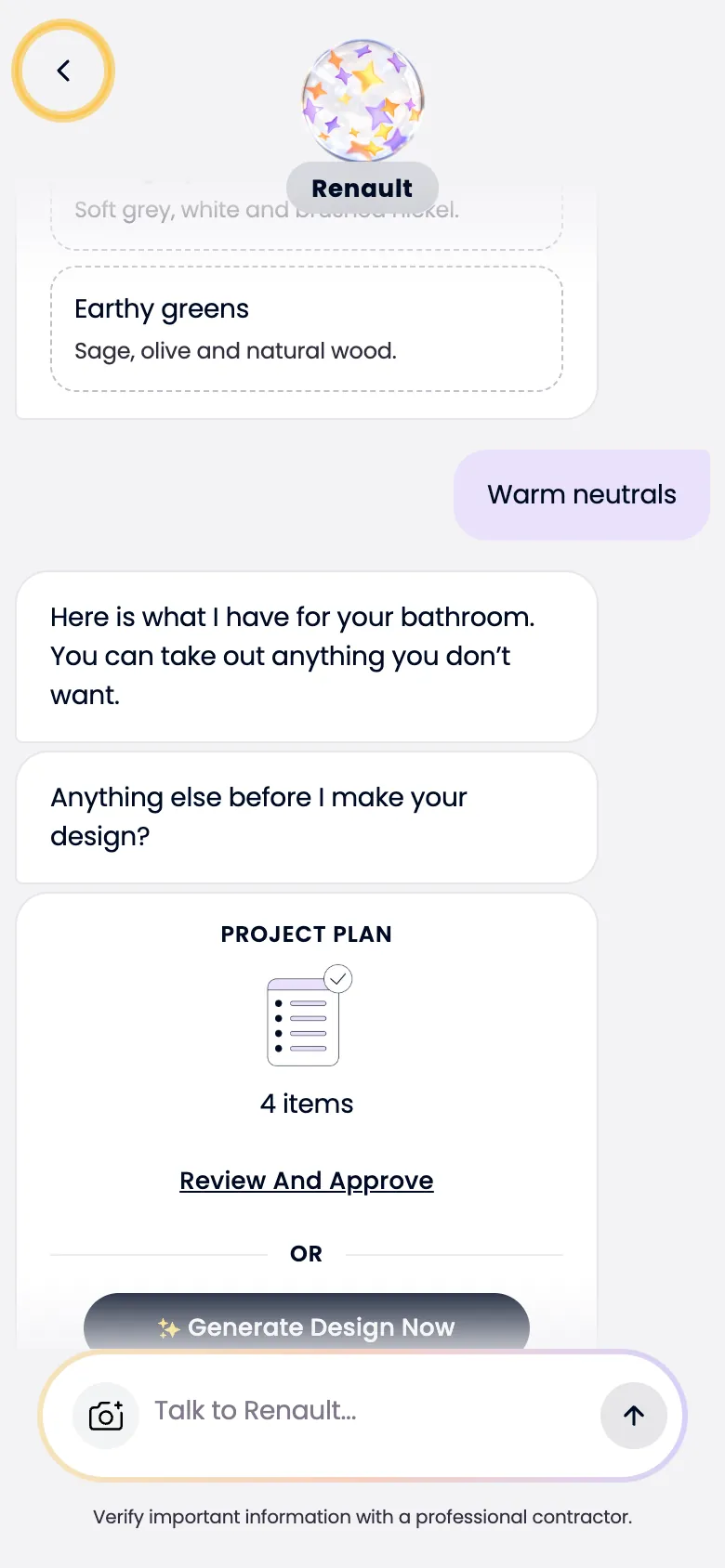
Approve the plan
Renault writes a project plan. Edit it or generate now.
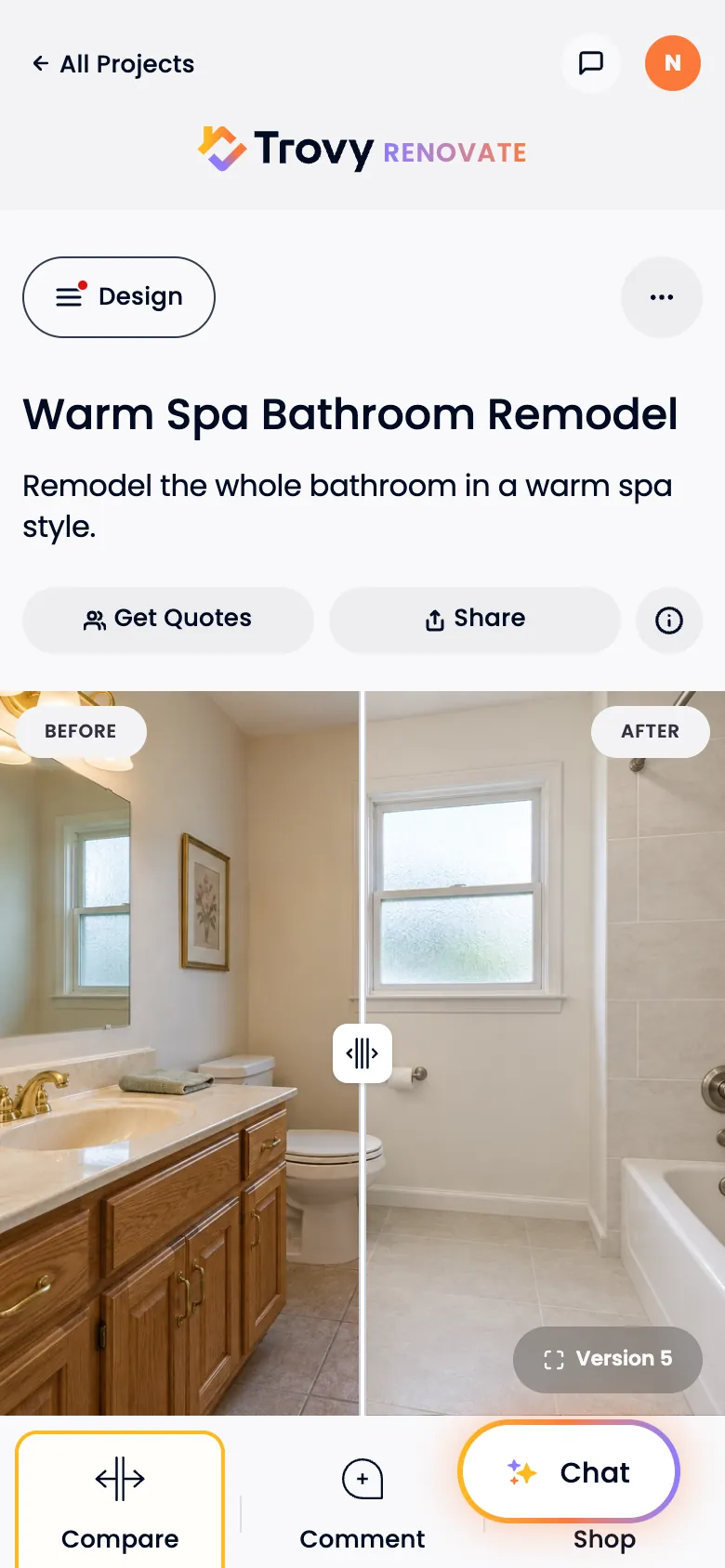
See your new room
Drawn on your own photo, with a before/after slider.
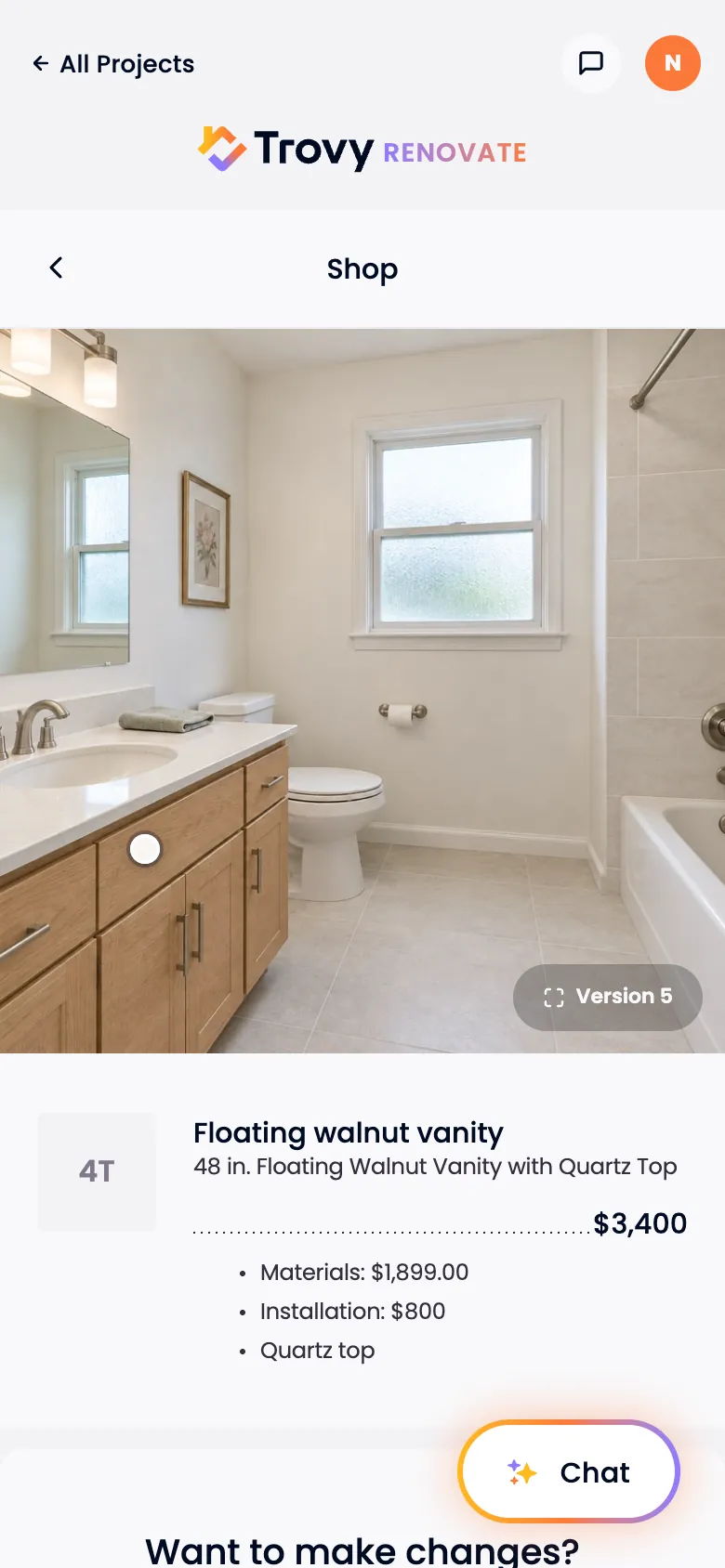
Price it and shop it
Materials and labor, each product pinned and linked.
The project and the process
Team
Me, an engineer, a PM
We all started on the project concurrently.
Process
Figma to code to Figma to code
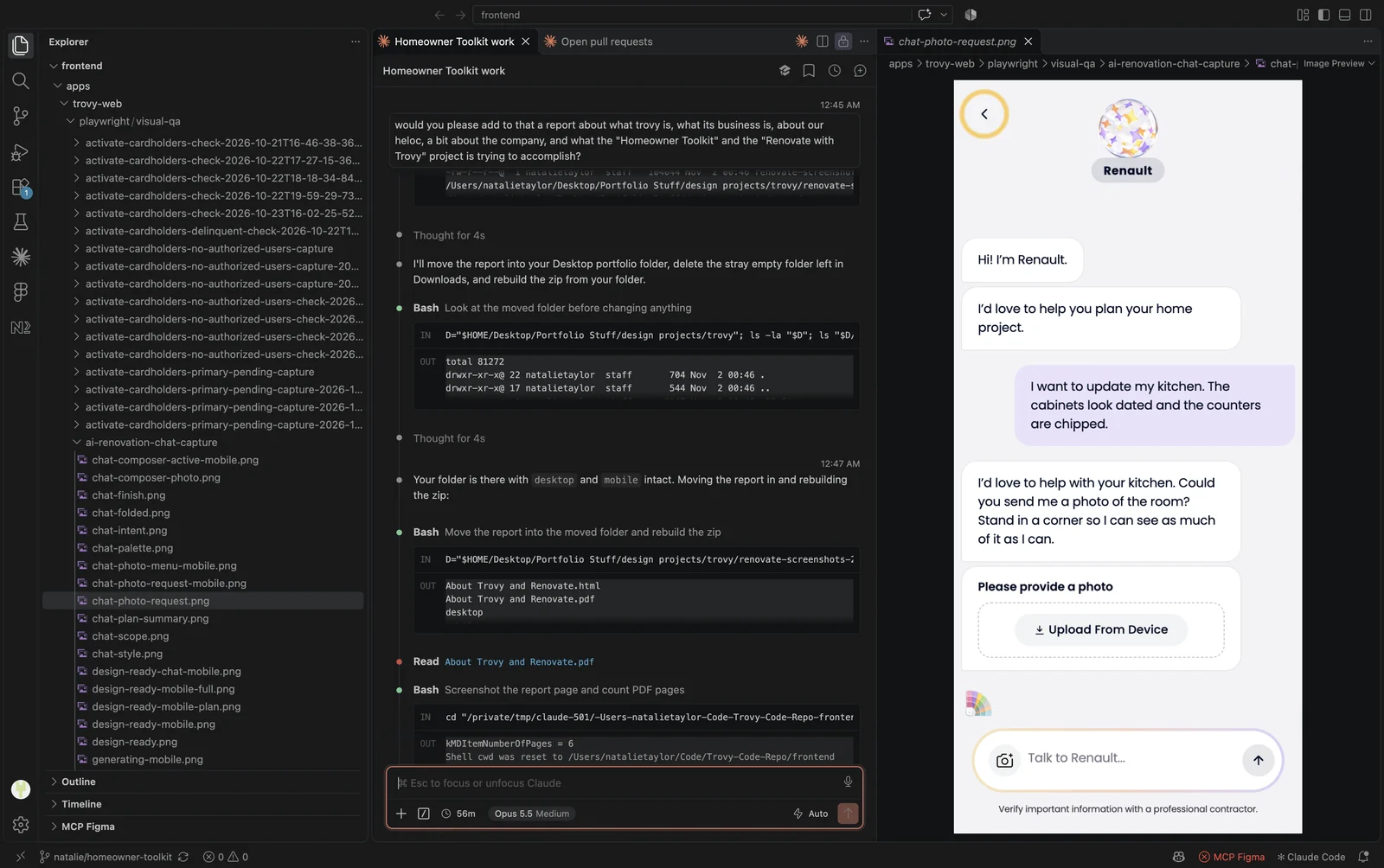
I move into code early, working in VS Code, the Claude Code app or Claude in the terminal depending on the task. Many design decisions after that get made in the running build.
Tools
Claude, Figma, Notion, Slack
...and ChatGPT and Gemini for video or photo assets.
What I’ve learned so far
I got my environment set up over the summer of 2026. Here are my takeaways so far on the new way of working.
Design input makes the difference.
Say less, and send a Figma link. It’s much faster as a seasoned designer for me to describe my ideas in this way, and Claude’s output is better for it.
Sweat the small stuff?
I used to sweat it in Figma, now I sweat it in code. Figma gives the project direction, code gives it clarity. Claude can help uncover states or conditions I hadn’t fleshed out yet, and we can go back and forth in this way.
Source of truth is the kicker.
Is it Figma? Is it code? Is it somewhere else? This has been the main friction point. I’m constantly writing back to Figma from Claude, and vice versa. I think all teams are grappling with this issue.
Integrate everything your organization can.
If all the decisions are being made in Slack, documented in Notion and visualized in Figma, and you connect it all with Claude, the whole company has context about decisions. No meetings???
Define ownership and who makes the final call.
In an environment in which anyone can “code” or “design”, ownership must be declared. Also provide that context to your coding agent, so it knows whose version wins when there’s a merge conflict.
If everyone can ‘do it all’, judgement is everything.
Sure, we can now do whatever we want at high speed. But that’s not what successful products/businesses do. “Okay” will become the new floor, and “Incredible” will be the expectation for top companies.